2011

Rose Power
Showing posts with label research. Show all posts

Thursday, 29 December 2011

Horrible literature!?

It is worth noting that spin-offs of the hugely successful Horrible Histories series encompass (gruesome) geography and (horrible) science. But there's none about english literature!


There is definitely a niche in the market for such study guides, particularly for boys as statistically they prefer school subjects like Science but struggle with English.


"Last year 85% of 11-year-old girls reached the expected level in English for their age compared to 76% of boys"
"Nearly a third of the teachers questioned said boys were put off before the book had even been opened, if they saw it had more than 200 pages."
"Teachers also revealed that classics of English literature, such as those by Jane Austen, are putting boys off reading." (via BBC News)

Visual study guides

Though I thought the email format in my previous post would be really helpful in a study guide to the book, not all works of literature contain letters from one character to another. It was entertaining but not very universal.


As I established earlier, VISUAL information is what's missing from a lot of online study guides. Before I begin creating my own images, I had a quick look at existing examples. 


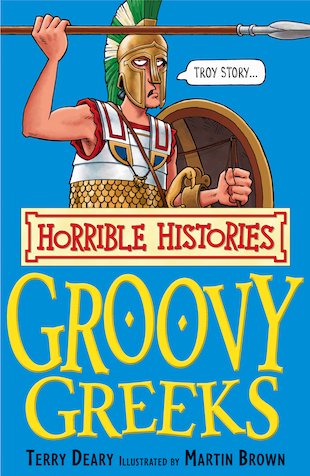
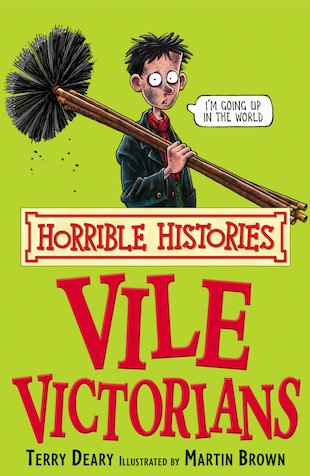
Though not available online as a study source (their website simply promotes their TV show and live tour) the 'Horrible Histories' series dominates this market, outside of the internet.


What makes them successful?

Though aimed at children old enough to read, they use images on every page. These include fake adverts, cartoons and comic strips. 
Also, the information provided isn't what you'd learn at school (teachers are made fun of in the introduction of each book) it's more tailored to children's interests: 'history with the nasty bits left in'. 


Friday, 16 December 2011

It's nearly Christmas!

The images I have been making have ignored an important element of books - their three-dimensional physicality, as opposed to the flat computer screen.


Here's a festive way of showing you can make sculptures from books. While I don't think this is hugely relevant to the way my ideas are developing, it's a good reminder of the ways real books have more uses than e-books.

Saturday, 10 December 2011

Books vs. The Internet

After realising Books vs. Technology was a misleading title I have been thinking a lot about how recent technology is able to improve literature. I have researched the ways the Internet may be destroying literary environments and even books themselves, but maybe I can prove this idea (and myself) wrong.


The main advantage the Internet gives books (and most things) is accessibility. I don't just mean ability to discover and locate titles online but rather, ability to understand them. The Internet has proved useful for study support (games on BBC Bitesize would be a good example) and makes difficult texts less intimidating through sites like Sparknotes, and even Wikipedia.
A student daunted by a huge book they have to read (and understand) might go to one of these sites for a plot summary before they begin. Twenty years ago this would not have been possible. 
However, I feel like what these sites are missing (as you can see from above) are images. Many people learn visually, and for them, a wordy online study guide might be almost as scary as a big book. The Internet floods our brain with images daily (popular sites like Facebook and Youtube are obvious examples) whereas, like I discussed before, websites full of texts are boring and repellant.


It seems odd that online study guides don't utilise the obvious visual potential of the Internet!

Wednesday, 7 December 2011

Books vs. Technology

This would be a terrible title as it's very misleading; we forget that books themselves are the product of technology.
A childrens' book about the invention of the Gutenberg press
In the 15th Century, the printing press would have been the height of technology, causing similar controversy to new technology today. People mourned the loss of the beautiful illustrations and calligraphy that filled the handmade books previously used. As books were more widely available, reading aloud became much less prevalent. Some were worried that reading the Bible (the first book to be published on the Gutenberg press) alone would allow then to interpret it their own way - very dangerous! 
Kindle fail: a book never runs out of battery
A better title might be Books vs. NEW Technology, as I have been researching Kindles (and other e-readers) 
A list I made from my research on forums and articles
As you can see, on paper Kindles look like a vast improvement. But a lot of the reasons why people prefer real books are difficult to describe. It's more to do with the experience of handling them, or the atmosphere of a bookshop or library; these things are very important to some, myself included.

Tuesday, 6 December 2011

Twitterature


I have been reading 'Twitterature', which on the outside looks like any Penguin classic. However, the inside is a little different...
The blurb claims it has 'distilled' 60 great works of literature, 'relieving you of the burdensome task of reading' them. They have disregarded proper English for language typical of Twitter: capital letters for emphasis, extreme punctuation, short statements, swearing.

Some highlights were Oedipus (MY EYES MY FUCKING EYES AGGGGHHGHGHGHGHHH!!!!! I was totally not expecting that to hurt so much') and my favourite book The Odyssey ('Finally home. Everything good! Wait, who the fuck are these dudes hitting on Penelope?')

I was interested in how bizarre it seems for books to be rewritten in an internet format... and then put back into a book. But it works; it's funny.


I looked at the Twitter pages of present-day authors, like Neil Gaiman (above) but these are simply to update and communicate with fans, rather than a medium for writing. I wonder if I could use Twitter for my idea.

Sunday, 4 December 2011

Shakespeare's Twitter

Someone has been regurgitating the entire works of Shakespeare, one play at a time, via Twitter.


What does this do to the works?
It certainly puts emphasis on certain words as often sentences have to be broken up to fit into the '140 character or less' format. The context is interesting, as people are most likely to read the posts amongst the other posts on their Twitter feed rather than all together.

It's amusing that the person doing this claims to be Shakespeare himself "tweeting from the grave". It leads us to imagine how great writers would cope if they were alive now; would they adapt to our fixation on social networking sites?

Friday, 2 December 2011

Shakespeare & Company

Me at Shakespeare & Co.

Last April I visited this famous book shop in Paris. Their eclectic scrapbook-style homepage brilliantly encapsulates their aesthetic and promotes instore events, and they use their mailing list to email information to people all over the world. But despite embracing (not fighting) the internet, it is a huge threat to them and other independent book shops.

Clip from Mourir Auprès de Toi (To Die by Your Side) by Spike Jonze 
Full version on Vimeo


This animation by Spike Jonze was made in the shop. I think it effectively uses (the internet and animation) technology to present the old fashioned world of the book shop as an exciting place.


This is useful in thinking about how I can adapt books so they translate into an online language which improves rather than destroys or cheapens literature.